In The Margins

A place for those who deeply want the words of scripture to take root not only in the big areas of their life but also in the margins of everything they do.

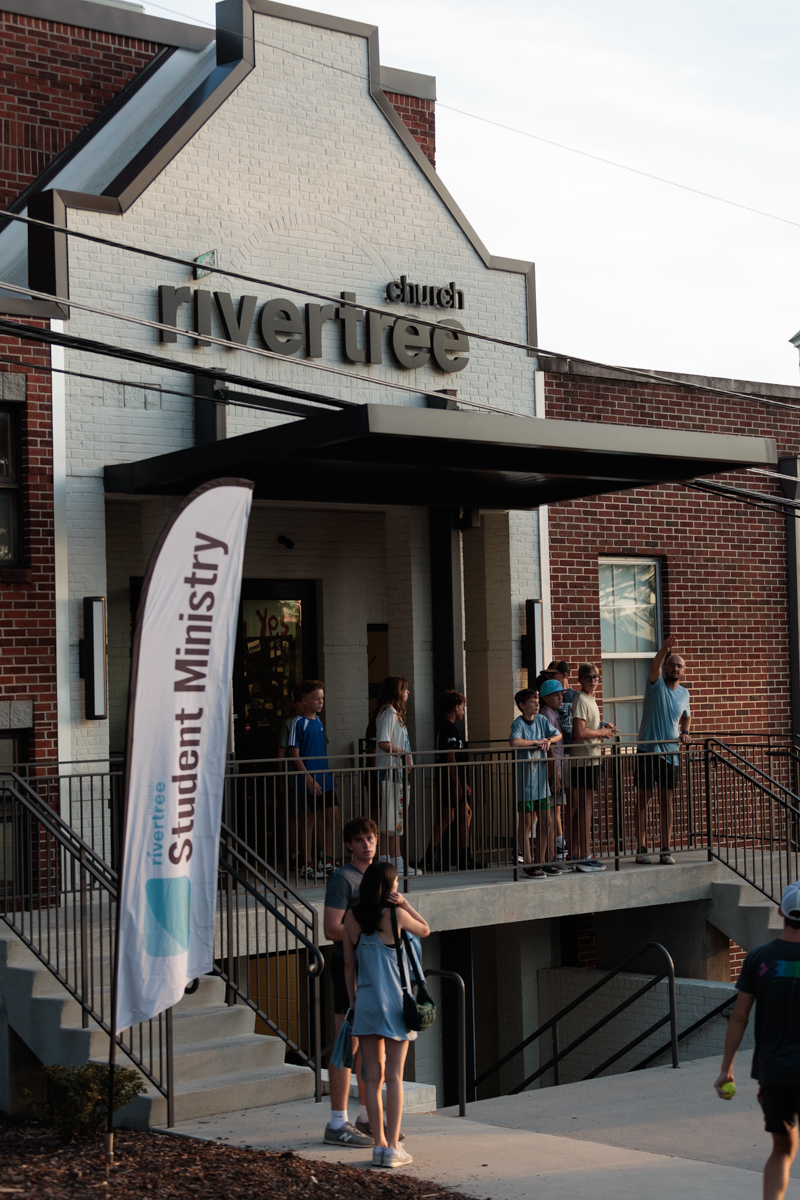
An extension of Rivertree Student Ministry

  • Sunday Reflections — Aug. 24

    This last Sunday, Rivertree had a church-wide Making Room Night of Prayer and Worship. Throughout the service, elders and pastors would get onstage and lead the people through a devotional thought and prayer. This post is an expansion on one such thought.

    19 So, then, you are no longer foreigners and strangers, but fellow citizens with the saints, and members of God’s household, 20 built on the foundation of the apostles and prophets, with Christ Jesus himself as the cornerstone. 21 In him the whole building, being put together, grows into a holy temple in the Lord. 22 In him you are also being built together for God’s dwelling in the Spirit.

    -Ephesians 2:19-22

    I (Justan) grew up obsessed with the TV show Transformers—and eventually the movies released between 2007 and 2017. The show’s premise fascinated me: alien robots arrive on earth, disguise themselves as vehicles or animals, and then “transform” into machine-like humanoid beings. The Autobots fought for good while the Decepticons opposed them. As a kid, I loved walking around with my Transformers toys, carefully shifting each piece from firetruck to robot, amazed by how one thing could become something entirely new.

    Ephesians 2:19–22 describes a far greater transformation—the one that takes place in the life of a Christian. It is the transformation from self-lovers into God-lovers. By nature, we are all “lovers of self.” Passages like 2 Timothy 3:1–2 highlight how self-love lies at the root of human corruption. This kind of self-love is a self-centered posture that elevates our desires above God’s will and the needs of others. But through Christ’s work on the cross, believers are transformed into something new.

    So, what are we being transformed into?

    In Ephesians 2, Paul gives three vivid images:

    1. A new nation. As God-lovers, we become “fellow citizens” of God’s kingdom, living under His reign.

    2. A new family. God makes us “members of His household,” with Him as our Father and each other as brothers and sisters.

    3. A new temple. Together, God-lovers are built into a living temple where He is worshiped and where His Spirit dwells. Paul stresses that this is an ongoing process: we “are being built.” God continually expands and shapes us to make room for His presence.

    Every day, God is transforming you into who He created you to be, shaping you to fulfill the purpose He has given you (Ephesians 2:10). A few years from now, by His grace, you should not be the same person you are today.

    So what’s the point?

    Know this: you will change. You will grow. God is transforming you. He may not immediately change your circumstances, but He is faithfully changing you.

    -In what ways do you notice God reshaping your heart, character, or desires right now?

    -Where might you be holding back from God’s work of transformation, and how can you invite Him into that space?

    -What signs in your life point to the ongoing evidence of God’s transforming power?

    Further Reading and Study: Romans 12:1-21

    ***Thank you to Andy Sharples for letting me use his notes and ideas for this post.

  • Theology Thursday-The Inspiration of Scripture

    The whole of Scripture is “breathed out” by God with the same purity and power as the words he thundered from Mount Sanai. -R. Carlton Wynne “Scripture: Foundational for Life and Ministry”

    How do I know what God is telling me about my life? How does God want me to live my life? What does God think about my motivations? My actions? My desires?

    Each of these questions has a specific answer, and every answer can be found in the pages of Scripture. As Christians, we believe the Bible speaks to every situation in life. But why do we believe that? This conviction rests on a foundational doctrine called the inspiration of Scripture.

    The inspiration of Scripture means the Bible is the very Word of God. Here, the word inspired does not mean that biblical authors were simply motivated or encouraged to write. Instead, it means that all Scripture is “breathed out” by God. Paul explains this in 2 Timothy 3:16: “All Scripture is God-breathed and is useful for teaching, rebuking, correcting and training in righteousness…” (NIV) Other translations, like the CSB, use the word inspired in place of God-breathed, highlighting the divine origin of Scripture.

    While human authors penned the words, the Holy Spirit guided them so that the Bible remains fully divine. As Peter writes:

    “…no prophecy of Scripture comes from the prophet’s own interpretation, because no prophecy ever came by the will of man; instead, men spoke from God as they were carried along by the Holy Spirit.” (2 Peter 1:20–21, CSB)

    Inspiration teaches us that Scripture, though written through human hands, perfectly reflects God’s character. So why does this matter? Why should a high school student worried about grades, friendships, or stress care about the inspiration of Scripture? 

    Here’s why: when you open your Bible, you can be confident you are reading the very words of God. You aren’t reading mere human advice—you are encountering clear, trustworthy guidance from the Creator of the universe. The inspired Word has the power to transform your attitudes, shape your desires, and direct your actions to look more like Christ.

    -Since Scripture is “God-breathed,” how does that truth shape the way you read and apply its words to your daily life?

    -When you open your Bible, do you approach it with the awareness that you are encountering the very words of God? How might that change your posture in reading?

    -If every word of Scripture is inspired, what areas of your life do you need to bring under its authority more fully?

    For further reading and study: 1 Corinthians 2:12-13

  • Sunday Reflections — Aug. 17

    Colossians 1:1-8

    9 For this reason also, since the day we heard this, we haven’t stopped praying for you. We are asking that you may be filled with the knowledge of his will in all wisdom and spiritual understanding, 10 so that you may walk worthy of the Lord, fully pleasing to him: bearing fruit in every good work and growing in the knowledge of God, 11 being strengthened with all power, according to his glorious might, so that you may have great endurance and patience, joyfully 12 giving thanks to the Father, who has enabled you to share in the saints’ inheritance in the light. 13 He has rescued us from the domain of darkness and transferred us into the kingdom of the Son he loves. 14 In him we have redemption, the forgiveness of sins.

    Last year, I got really into fantasy football. For those unfamiliar, it’s a game where friends draft professional players to form teams and score points based on real-life performance. I had played before, but last year was different—I went all in. At first, I could only name a handful of players, but after diving into podcasts and research, I began to understand the game in a whole new way.

    Now, as this season begins, I’m excited to jump back in. One of the best parts of fantasy football is the live draft, where everyone competes to pick their players. It’s competitive, strategic, and a lot of fun.

    Last year, when draft night came, I knew nothing. I had no plan and no strategy.
    This year is different. I have a strategy. I have a plan.

    Why? Because knowledge changes how you act. My understanding of football—players, stats, and trends—now shapes the way I approach the game. Paul makes this same point in Colossians: knowledge of God’s will changes how you live.

    Ultimately, knowing God’s will leads you to a life that pleases Him. And what is His will? That you walk in the light and live in the Kingdom of Christ. Verses 13–14 remind us: you have been rescued and transferred. You’ve been pulled out of darkness and brought into light! Let that fill your heart with gratitude!!! 

    Think about the darkness around you:

    • the brokenness of the world,
    • the toxicity of certain relationships,
    • the confusion and mistakes tied to sin and unrighteousness.

    If your hope and faith are in Christ, you’ve been lifted out of that. You’ve been given an alternative existence—one marked by redemption and the forgiveness of sins. James Rebanks has coined this phrase “This is my life. I want no other.” As a Christian, I believe that the only way to live that type of life—one of purpose, of consequence, full of holiness and righteousness—is through the growing knowledge of his (God’s) will in all wisdom and spiritual understanding.

    -How has growing in your knowledge of God shaped the way you live and make decisions?

    -What “darkness” in your life has God rescued you from, and how does remembering that deepen your gratitude today?

    -Where do you see the tension between the brokenness of the world and the light of Christ in your daily life? How do you respond to it?

    -What practical steps can you take this week to walk more fully in the light of Christ and live out your identity in His Kingdom?

    For further reading and study: 2 Corinthians 4:4 ; Romans 14:17-18

  • Sunday Reflections — Aug. 10

    Colossians 1:1-8

    1 Paul, an apostle of Christ Jesus by God’s will, and Timothy our brother:

    2 To the saints in Christ at Colossae, who are faithful brothers and sisters.

    Grace to you and peace from God our Father.

    3 We always thank God, the Father of our Lord Jesus Christ, when we pray for you, 4 for we have heard of your faith in Christ Jesus and of the love you have for all the saints 5 because of the hope reserved for you in heaven. You have already heard about this hope in the word of truth, the gospel 6 that has come to you. It is bearing fruit and growing all over the world, just as it has among you since the day you heard it and came to truly appreciate God’s grace. 7 You learned this from Epaphras, our dearly loved fellow servant. He is a faithful minister of Christ on your behalf, 8 and he has told us about your love in the Spirit.

    My family loves traditions. Movie night, Taco Tuesday, Sunday Lunch with the grandparents, presents on Christmas Eve; we have traditions for everything. Growing up, one of my favorite traditions was every Thanksgiving we would write letters to someone that we were thankful for and then read the letter to them. I know to some this might seem like a nightmare, but my family really got into it. We would think about it all year and around October we would start talking about who we were going to write our letter to. My favorite part of this tradition was reading the letter out loud to the person. It always felt intentional and authentic to let someone know what they meant to you that specific year. This tradition teaches me the importance of gratitude and thankfulness along with the power of encouragement and affirmation in regards to relationship with others. 

    Paul starts this letter to the Colossians with much the same voice and tone of affirmation and encouragement. He is thankful for the church at Colossae. 

    And why is he thankful?

    Because of their faith in Christ Jesus. As Paul quickly does in all of his letters he makes much of Jesus. But their faith is not an average faith; it is a faith of “bearing fruit and growth.” And this growth has happened because of their understanding of the gospel. They take the gospel message seriously and it has moved them toward growth and productivity in the name of Jesus. 

    Paul uses this moment of thankfulness to encourage and affirm the church in Colossae for their faith in Jesus Christ. Simply put, Paul shows us that Christian thankfulness is rooted in Christ. Gratitude is a conscious choice to notice the good around us. Gratitude pushes back against covetousness, selfishness, and entitlement. Ultimately, gratitude acknowledges all that the Lord has done for us despite the brokenness of the world.

    -What simple habits or practices could you build into your daily routine to help you notice and express gratitude more often?

    -When you look back over the past few weeks, what specific ways has God been at work in your life that you might have overlooked—and how can you thank Him for them?

    -Think about both the hardest and easiest seasons of your life—what shaped your ability (or inability) to give thanks during those times?

    -In what ways does your trust in God influence your capacity to be thankful, even when life is uncertain or difficult?

    For further reading and study: Philippians 4:4-20

  • “…and have put on the new self. You are being renewed in knowledge according to the image of your Creator.” Colossians 3:10

    My idea for this website stemmed from a simple question: what do I want for students? The question has a simple answer… more of Jesus. I want you to know him. To love him. To spend time with him. 

    So this is my best effort to offer content that gets you closer to Jesus.

    I want to ask good questions.

    I want this to be relatable. 

    I want to make you think about the intersection of your life, and your faith.

    Use the content put on this website as a springboard into the great wealth of knowledge found within the pages of the Bible.